Portable Hand Wash Station For Homeless
Nov 11, 2022
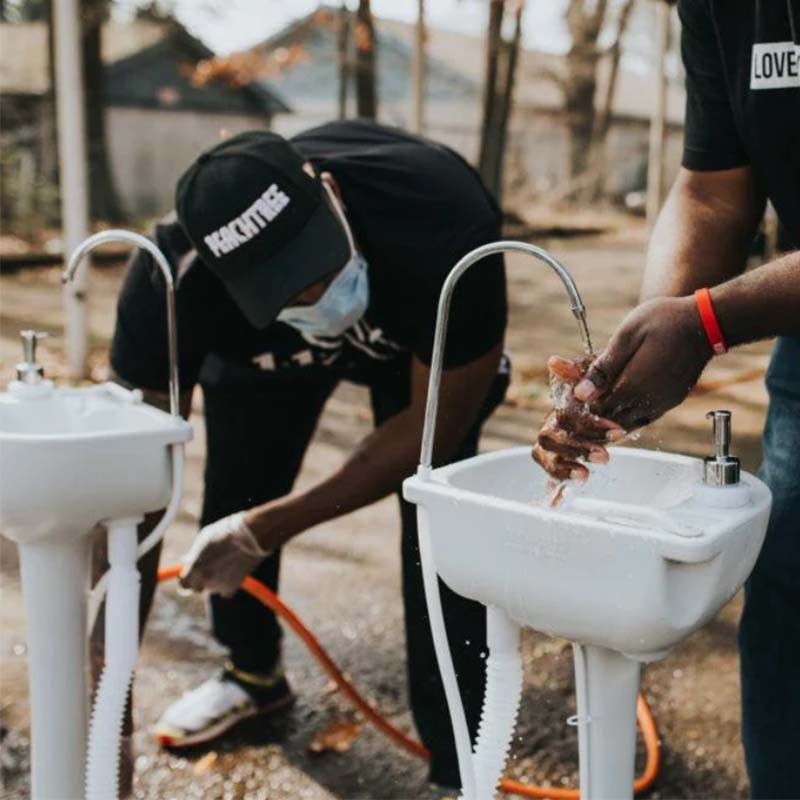
In the United States of America, as of 2019, there were more than five-hundred thousand homeless people living on the streets. That number has certainly not lessened in 2020. In fact, it is in growth. For these people, just getting through every day is a struggle, and the places where they can normally go for help are restricting access for safety reasons. Many homeless people have nowhere to turn, and are in need of ways to stay safe during this time. Therein lies in importance of portable sinks for the homeless community. There are many reasons why they are beneficial, but the first and foremost benefit is that they are more capable than hand sanitizers at keeping individuals clean. Indeed, they are very effective.
Another important benefit of portable hand wash sinks for the homeless community is that they can be easily moved where they are needed most. They are not fixed in place and as such are not limited by location. Wherever homeless people need the products, they can be taken. They are lightweight and easy to move and many of them, including those made by TOPINDUS, have wheels built-in which gives people easy access and transport to new locations.
And, of course, there is the matter of water. Portable sinks need water to be used in the system in order to actually do the business of cleaning hands (or other small objects). Homeless people do not have vast supplies of clean water to use for hand washing, but luckily that is not needed with portable hand washing stations. Indeed, they are actually extremely efficient, which is needed when working with the homeless community. The product needs to be reliable and simple to maintain, and portable sinks are just that. The water tanks in portable sinks can last for days at a time, which means that they do not need to be constantly changed. Again, this is important because it means that the products can be left to those who need them without constant maintenance. Nobody has to worry about the supply of water because it is often sufficient for long periods of time.
And maintenance, too, is also not a problem for most portable hand wash station. Many are made from strong compounds and metal and are assembled easily by the customers. This means that they will last for a while, even in the adverse conditions which most homeless people unfortunately live under. This alleviates yet more worry associated with products that will need to be used often and in conditions that most items are not built to withstand. Portable sinks are perfect for outdoor areas and can be used during much of the year.
All of this is to say that portable sinks will work very effectively in outdoor environments, and that using them is simple and effective. This is important to remember, because it is exactly what makes them so useful and necessary for the homeless community. Without having to worry if they will break, portable handwashing stations can be purchased and donated to homeless communities effectively. Without worrying if they will have enough water, portable sinks can be provided and used regularly. They can be taken from place to place easily and they are affordable and sturdy. They are, essentially, perfect for the homeless community, and their benefits are numerous. They are, as stated, much better for people to use than hand sanitizer. They keep people cleaner than they would otherwise be. Portable handwashing stations are equipped with large liquid soap storage dispensers, and regularly washing with soap will keep individuals cleaner than they would be otherwise.
It is also important to note that in metropolitan areas, where the vast majority of the homeless community resides, portable sinks can be moved from place to place and can serve large groups of people easily. A couple portable sinks, while not meaning much to the average person, can mean the difference between health and sickness, life or death, for those in the homeless community. That is a big deal. It might seem like a trivial thing, but it is not. The homeless community has been largely left to struggle alone during this the most turbulent time in the global community in a century. Alone, the struggle is unimaginable and immense, and the power that proper sanitization has to mitigate such struggle is truly astonishing.
The importance of portable handwashing stations for the homeless community cannot, and should not, be overlooked. As covered above, the benefits are numerous. The units are easily moveable, they can be left alone for days at a time, they are strong, they are affordable, they help get rid of germs and ward off disease, and they are very much needed by the homeless community in the current moment. Without proper cleaning, any virus will spread, especially one as easily transmitted at COVID-19. A strong virus is difficult to beat and control even for people with homes and access to quality medical care. For those who do not have those things, diseases can be a devastating part of life. The good that can come from portable handwashing stations for the homeless is immense. Private citizens have already been donating some portable sinks to cities in the United States to be used for the homeless population, and while they are helping, more are certainly needed. In this moment, buying and distributing portable handwashing stations to the homeless is not simply something good that should be done, but that must be done. Indeed, portable sinks are useful for a variety of communities even in times when health and virus concerns are not prevalent. Now, however, such concerns are rightfully worrisome, and the effectiveness of portable sinks in many situations, only one being for the homeless population, has been greatly increased and should not be disregarded.